

Partners
Creating clean water together
Microplastics are one of the most critical environmental problems of our time. More than 136,000 tons of microplastics are released into Europe’s environment and oceans every year. This has serious consequences for health, ecosystems, and drinking water safety. With the amendment of the Urban Wastewater Treatment Directive, or UWWTD for short, the requirements for monitoring, verification, and pollutant reduction in waste water are increasing significantly. At the same time, economically viable solutions are often lacking.
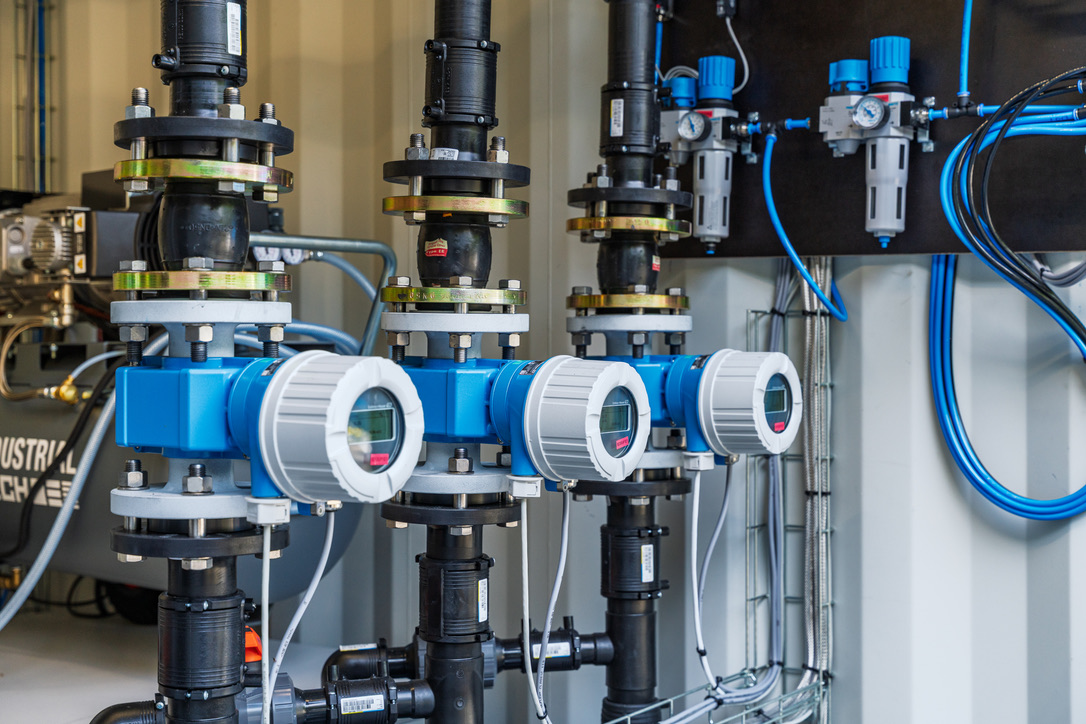
Our solution: MicroBubbles combines protected in situ microflotation with high-precision in-house analytics as a unique selling point on the market. The result is a modular and automated system that operates directly in the water.
To bring our technology to market, we rely on strong strategic partnerships. The results from pilot projects are used to optimize the technology and help ensure its economically efficient implementation. Stricter environmental regulations and municipal wastewater guidelines (UWWTD) necessitate action in various areas. Thanks to its modular design, our technology enables us to retrofit existing facilities, sedimentation tanks (imounded), sewage treatment plants and new rainwater treatment systems.
Technology with impact: clean water, scalable model

Requirements
New regulations tighten the thresholds for microplastics and require monitoring and reliable evidence.

Urgency to act
Increasing regulatory requirements and growing environmental awareness are increasing the demand for effective solutions to reduce TSS63, microplastics and micropollutants.

Sustainability
Our technology enables a measurable reduction in TSS63, microplastics and micropollutants without the use of chemicals, and supports sustainable water treatment.

Practical testing
Validation of our technology’s performance under real-world conditions in rainwater treatment systems.
Technological Validation with Impact
It is estimated that only about 38% of rainwater treatment systems currently meet the requirements of the DWA-A 166 standard, while at the same time the performance requirements for the substance parameter TSS63 are increasing. In situ microflotation enables efficiency improvements through retrofitting and optimization of both compliant and non-compliant plants.
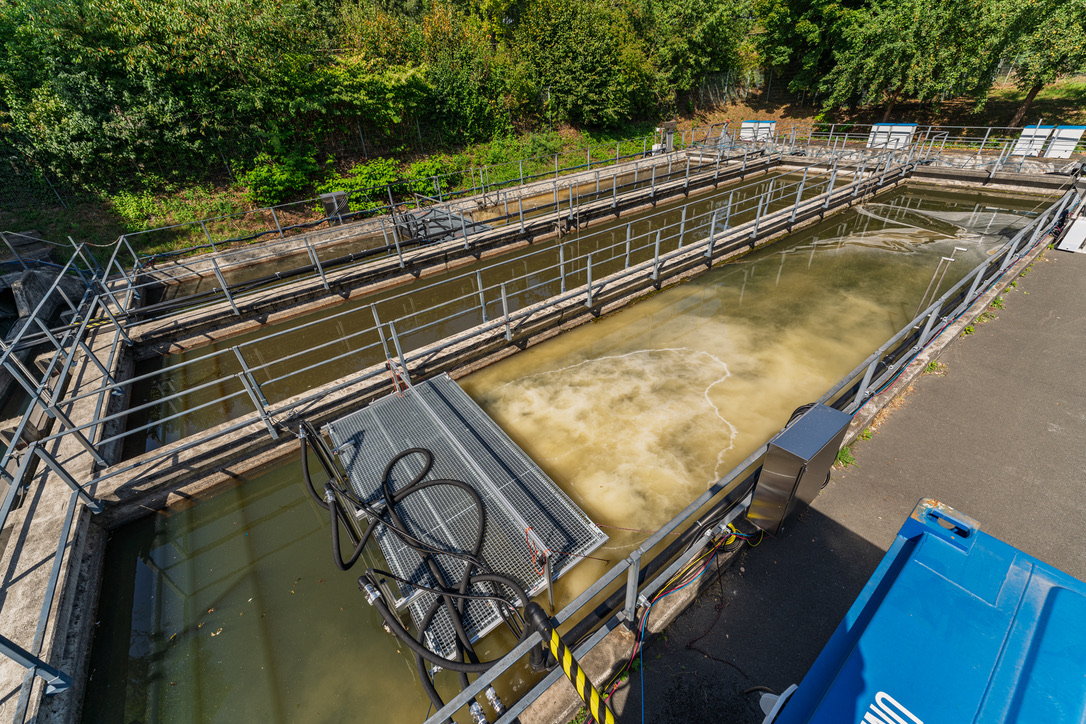
Rainwater basins are major hotspots for microplastics, such as tyre abrasion, and micropollutants. At the same time, they offer the greatest potential for preventing these substances from entering the environment at an early stage. Our in situ microflotation is being tested under real-world conditions in rainwater treatment systems and specifically adapted to different conditions. The focus is on investigating and monitoring various rainwater treatment systems. Identifying hotspots for microplastics and increasing the efficiency of TSS63 retention are integral essential components of these investigations.
Pilot Project with the Stadtentwässerungsbetrieb Paderborn
As part of a long-term monitoring project of a sedimentation tank impounded in Paderborn, TSS63, microplastics, and micropollutants in stormwater are being analyzed in cooperation with the Paderborn Municipal Water and Wastewater Authority. The basin served as the first test site for our prototype under real operating conditions to validate the technology’s performance, gain insights into the TSS63’s retention efficiency and lay the groundwork for further development.
Pilot Project with the Autobahn GmbH Branch Westfalen
As part of a long-term study of highway rainwater treatment systems, seasonal variations in TSS63, microplastics, and micropollutants in stormwater are being monitored in collaboration with Autobahn GmbH’s Westphalia branch. The study examines various stormwater treatment facilities with different technical standards to characterize the hydraulic and substance load.
Our Partners










Others areas of application
SYSTEM PRACTICE
We deliver solutions that work reliably, require little maintenance and achieve consistently high efficiency. The combination of microflotation and precise in-house analytics creates a data-based system that can be seamlessly integrated and provides reliable evidence of pollutant reduction.
Planning PRACTICE
We help translate technical requirements and economic needs into viable concepts. Our scalable in-situ technology with precise analytics can be integrated without costly modifications and provides reliable data for monitoring, verification and long-term planning security.
Are you looking for a partnership that combines environmental impact, technological expertise, and scalable market potential? We’re looking for strategic partners to take the next step with us!