
Planning practice
Clean water starts with innovative technology
Planning and engineering firms face the challenge of bringing together technical requirements and economic needs and translating them into an optimal overall concept. There is a demand for solutions that can be integrated into existing systems without costly conversion measures and lengthy planning processes, provide reliable evidence, and create long-term planning security.
Our technology offers exactly that: a scalable, modular system for the efficient removal of microplastics and micropollutants. Elimination in water and supplementary analytics create a data-based overall system that delivers precise results for monitoring and verification. This provides a basis for sound planning decisions and future-proof water purification.
How MicroBubbles solves the challenges of water purification

Regulation
New legal requirements tighten the limits for microplastics and require monitoring and verification, increasing the pressure to act. Among other things, the specifications and requirements of DWA-A 102 and KARL play a central role here.
Process integration
Our scalable technology can be flexibly integrated into existing processes, thereby reducing planning effort and costs.

Maintenance
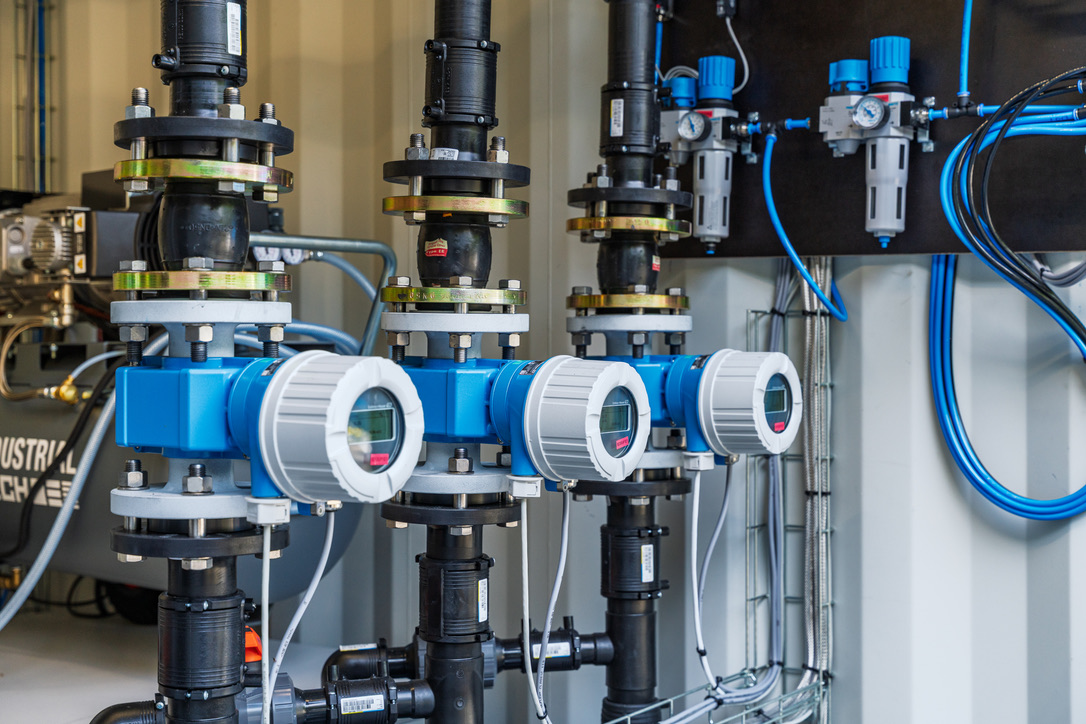
The high degree of automation of the MicroBubbles modules enables long maintenance cycles and low failure rates.

Practical testing
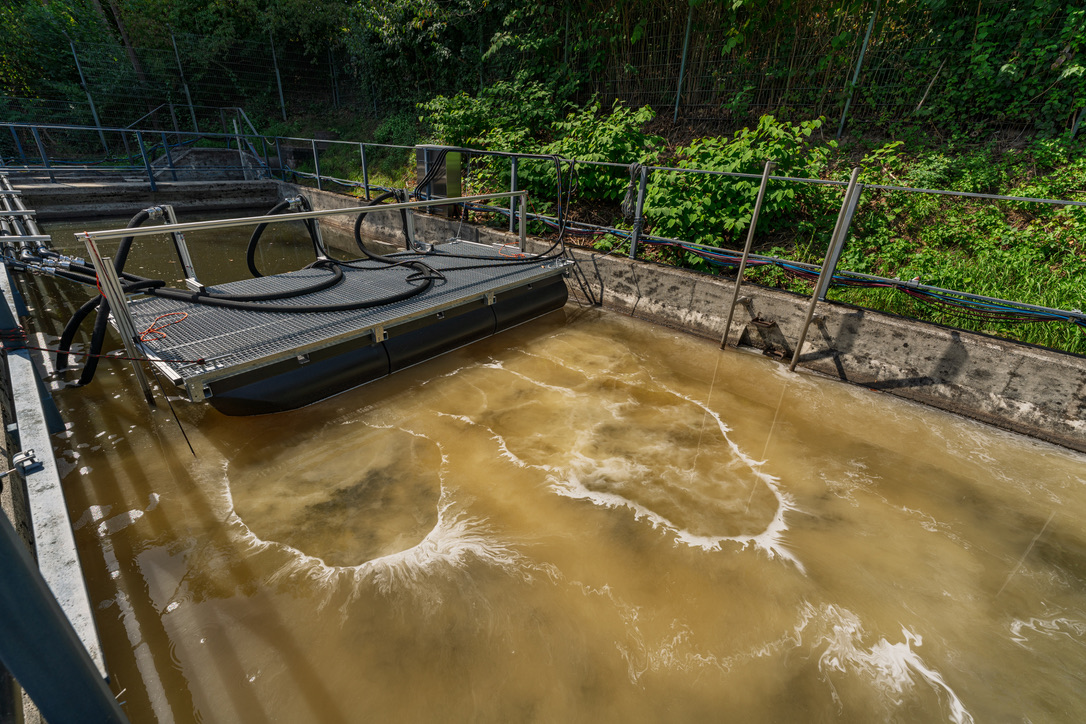
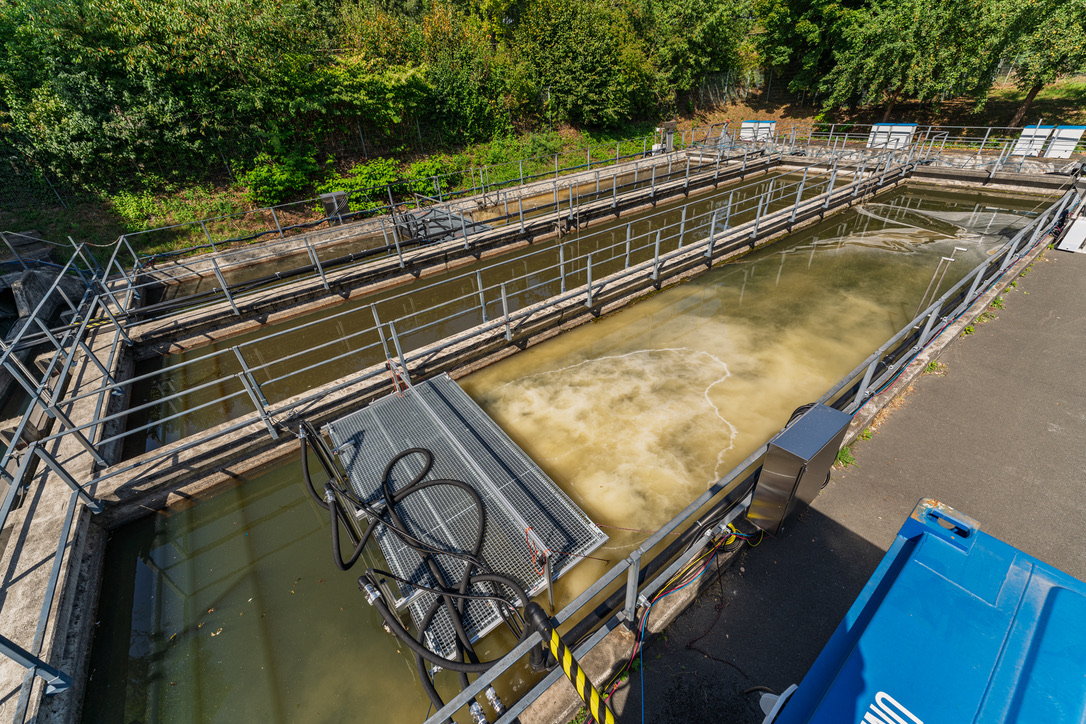
Validation of the performance and advantages of our microflotation system under real conditions in an rainwater collection basin of a regional municipal operator.
Microflotation in practice
Out in situ microflotation is suitable for both construction and retrofitting of stormwater treatment facilities. The process relies on the controlled generation of microbubbles (⌀ 45 μm), leveraging the hydrophobic properties of microplastics to significantly enhance the removal of fine particulate matter (< 63 μm, TSS63) and other pollutants, in particularly tire wear particles, compared to conventional sedimentation.
The results to date are based on several months of continuous measurements with numerous recorded precipitation events. These show that pure sedimentation in the sedimentation tank (impounded) has only low and highly fluctuating efficiency levels, which also depend on the hydraulic load. With the use of our microflotation, however, the retention of filterable substances such as TSS63 can be significantly improved and stabilized, regardless of how heavily the basin was loaded during a precipitation event. Microflotation also efficiently increased the retention of tire abrasion. This confirms that microflotation is an effective supplement to sedimentation and significantly increases the cleaning performance of the sedimentation tank (impounded).
Other ares of application
SYSTEM PRACTICE
We deliver solutions that work reliably, require little maintenance and achieve consistently high efficiency. The combination of microflotation and precise in-house analytics creates a data-based system that can be seamlessly integrated and provides reliable evidence of pollutant reduction.

Partners
We analyze microplastics and micropollutants precisely, quickly, and reliably. Our analyses provide scalable data to visualize pollution and derive effective strategies.
Innovative solution for precipitation and wastewater treatment local authorities. Eliminate pollutants, comply with regulations, and find out more here.